
Memorials in Changing Times
Via Irish Confederates Blog

If you value this story please consider becoming a paid subscriber. Your support is always gratefully received, and will never be forgotten. To buy me a coffee or two, please click this link.
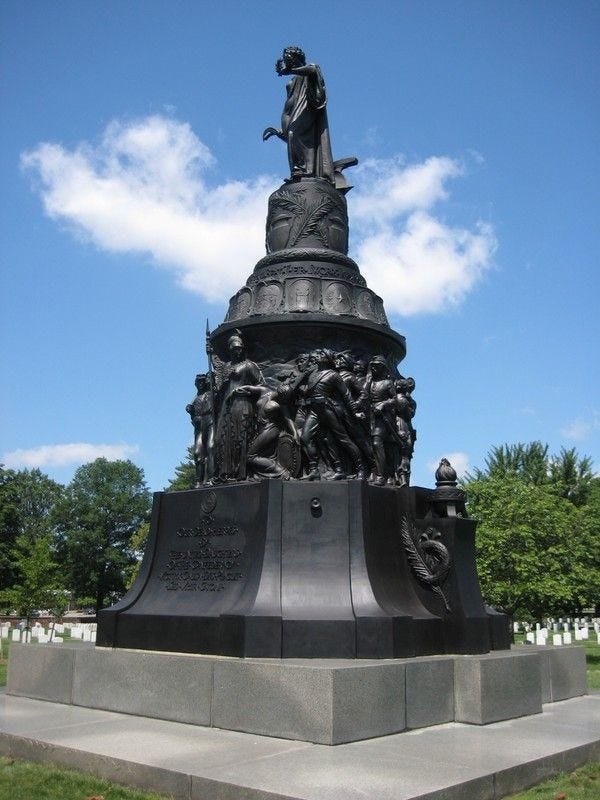
Here in the U.S. we have focused much attention on Confederate memorials in the South. Some folks see them as offensive, while others see them as memorial to the fallen. The change in how these memorials are perceived comes with the dramatic political changes in the South. This phenomenon is new to the U.S. but it is not new in other countries. Ireland has dealt with the question of changing politics and permanent memorials for decades. Ireland achieved its independence in 1922. Yet, it suffered under 700 years of British rule and it inherited dozens of British memorials and statues.
The Irish Republic was in no hurry to remove the statues when independence first arrived. In Dublin, there were several such statues. One statue to the great Admiral Horatio Nelson endured until 1966, the fiftieth anniversary of the 1916 Rising. It was blown up by unknown Dubliners that year. A monument to William, Prince of Orange, had also been blown up by unknown Irish in the 1930’s.
Queen Victoria
A statue of Queen Victoria, once centrally located in Dublin, was moved to storage in the late 1940’s. Later, it given to the City of Sidney, Australia. But, the figures which once surrounded Queen Victoria, figures representing the sacrifices of Irish soldiers in the Boer war remain. A statue to Prince Albert, the Queen’s husband, remains in Dublin today, tucked away in a corner of a public park. See Dublin Inquirer report here.